From the Brink of Collapse to Success: The Binubusan MPC Story of Faith and Resilience
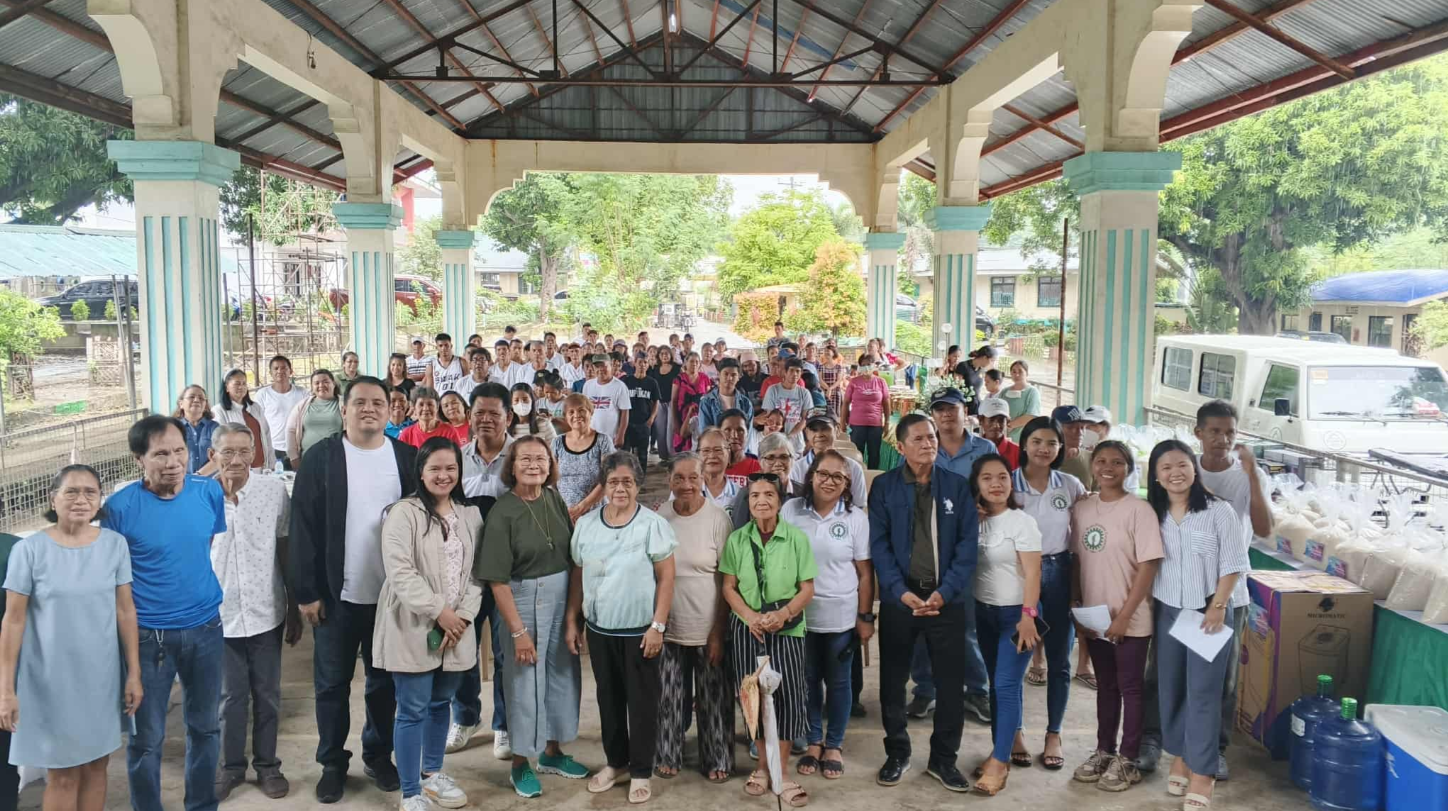
TUCKED in the coastal town of Lian in Batangas is a success story that took more than three decades to blossom. The Binubusan Multi-Purpose Cooperative (MPC) now stands as a testament to what happens when ordinary people refuse to give up. Or perhaps, more accurately, when one man’s (with the support of his wife) resilience and faith tore down all barriers that dared to stand in his way.
It’s impossible to disentangle Chairman Raffy Hernandez’s personality from the cooperative. Their identities are intertwined, and his values loom large in charting the organization's direction.
By all accounts and purposes, the cooperative should have died a long time ago, but was resurrected multiple times by an unshakable commitment to a set of virtues older than the mountains that surround it.
The Beginning
Binubusan MPC was born in 1991, during a period when cooperativism was sweeping across the countryside. One hundred twenty members pooled their resources, raising a modest ₱21,600 in paid-up capital. Their vision was simple: serve members through a consumer store that supplied agricultural needs—chemicals, organic fertilizer, feeds, and rice. They rented a small space for ₱500 a month and began operations in October of that year.
Of course, hope alone does not build institutions, as they would painfully learn.
Within months, internal control issues began to surface. A general manager and a storekeeper engaged in anomalous practices, leaving the cooperative with approximately ₱10,000 in uncollected debts. Then came the hog-fattening project, funded by the Land Bank of the Philippines for less than ₱500,000. The venture failed spectacularly due to poor pricing, unfavorable market conditions, and management shortcomings.
The First Death
By March of the following year, operations had literally ground to a halt. The cooperative was drowning in ₱700,000 of debt.
For any organization, the blow would have been fatal. Instead, the Binubusan MPC declared a moratorium on interest payments. Through painful negotiations and suspended interest, they managed to reduce the debt to ₱250,000. But the cooperative was already a shell of its former self, with members quickly abandoning ship.
The years that followed were like a long winter as the cooperative existed in a state of suspended animation. Other members stayed only out of loyalty, not expectation. The organization that had once buzzed with activity stalled, its purpose unclear.
The Second Death
However, Mr. Hernandez refused to yield and banked on his reputation to get more financial lifelines. However, this time, the cooperative was duped into investing significant sums in ventures that promised returns. As he conceded, the details are still too painful to recall, and only because he blamed himself. He should have been smarter than that.
So, Mr. Hernandez found himself at a crossroads. He could have simply walked away from his dream. Many would have understood. After all, the cooperative already died twice. Why breathe new life into something that seemed cursed?
But Mr. Hernandez, who would later become Chairman Emeritus, saw something others missed. He saw a sleeping giant. A foundation. And he had something that no bank statement could ever measure: faith in God.
The Co-op Bible
It was during the darkest hours that Mr. Hernandez turned to the Book of Wisdom of Solomon. The book’s words became more than a refuge, it became a management manual.
“Faith that can move mountains is nothing without love and action,” he said.
For the chairman, the following Solomonic virtues became non-negotiable pillars for the cooperative’s rebirth:
● Faith—the conviction that the cooperative could rise again, even when evidence suggested otherwise.
● Compassion—understanding that behind every balance sheet were families praying for their success.
● Integrity—the resolve to do what was right, even when no one was watching.
● Courage—the will to enforce difficult decisions through uncertainty.
● Justice—ensuring that members received what was due to them.
● Wisdom—the discernment to know which opportunities to seize and which to set aside.
These six virtues became the cooperative’s operating system, the software that runs the organization, long before the hardware would be rebuilt.
The Third Death
Just when the co-op began to find its footing, the third blow came. Another financial promise turned to ash. By any conventional measure, the organization was finished considering the staggering debt, the dwindling membership, and the reeling reputation.
But Mr. Hernandez and his wife refused to let it go.
“We were near bankruptcy,” he recalled. “But my wife had faith in me. She asked me if this was what I wanted, and she stepped up. She was a teacher, and so she took out a loan and raised money to provide another lifeline to the cooperative.”
His wife’s support was unwavering. This allowed Mr. Hernandez to step down from his previous job and focus on Binubusan MPC. While he tried to salvage the organization, she provided the stability at home and the moral and financial support that allowed him to persevere.
Together, they embodied the single-mindedness that Solomon extolled—compassion for the members who had invested their hopes in the cooperative.
Slowly, painstakingly, the co-op began to pay off obligations—one peso at a time.
The Resurrection
The pivot came when the cooperative found a new venture: converting waste into bio-fertilizer. But it took legislation, through the Organic Agriculture Act, for the cooperative to get a captured market.
After all, Binubusan MPC sits right next to an organic gold mine. The cooperative entered into a partnership with Central Azucarera Don Pedro Inc. to dig through stacks of biowaste underneath swaths of sugarcane plantation, and the product became Fedmuco Fortified Organic Fertilizer.
“Unlike manure, our fertilizer doesn’t have a smell with the same effectiveness, which is why it’s popular among our clients,” he said.
The co-op’s primary product, Fedmuco, is registered with the Fertilizer and Pesticide Authority, processed from sugarcane waste such as mill ash, bagasse, and mud press. From the initial 5,000 bags distributed among member farmers, production grew to 20,000 bags until the demand skyrocketed.
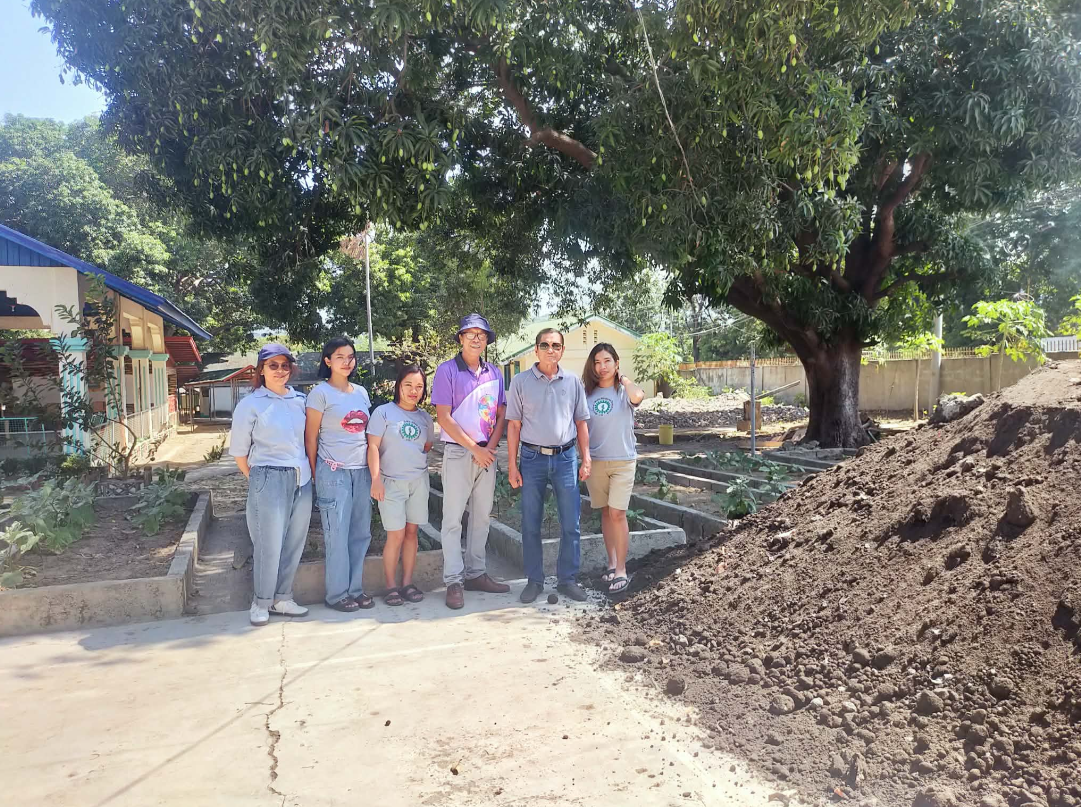
Today, the cooperative is processing 80 tons of raw biowaste monthly to produce high-quality organic fertilizer. “Our raw materials are in no danger of depleting. We estimate them to last at least 10 years since we only mined the surface,” he explained.
They are now expanding their markets across the country, with delivery orders as far as Mindanao. The raw materials are not the problem; the issue is how to cope with the demand. But that’s always a good problem to have.
In fact, they are looking to expand nationwide, aiming to be a low-cost, high-quality producer, claiming their product is about 30% cheaper due to access to large-scale resources.
The income from the organic fertilizers alone allows the cooperative to pay off its debts and have some extra for investments.
As the cooperative proved its sound fiscal sense, creditors came crawling.
As of this writing, the cooperative has a standing loan with the Federation of Peoples' Sustainable Development Cooperative (FPSDC). And Mr. Hernandez is not even worried. “We can pay that in three months once we collect on our payments,” he said, adding that the cooperative has current receivables of approximately P15 million.
More than the money, he appreciated how FPSDC opened them to new experiences through study tours and expanded their network. This way, they managed to benchmark their co-op against the best practices employed by other organizations not only in the Philippines but overseas.
The Legacy
From its ups and downs, Mr. Hernandez’s goal for the cooperative—whose total assets now exceeded P25 million—has never wavered.
Its 121 members—farmers, laborers, professionals, and households—have seen their cooperative fail not once but three times. The membership is thin compared to its size, but it was designed that way. He said that if they are going to attract new members, they wish to limit membership growth to only 10% annually to reward those who stuck with them through the difficult years.
For instance, the core members’ P100 initial share capital grew by 4,000%, at least. He said no cooperative in the entire country can match that growth.
At 71, running to 72, Mr. Hernandez is very much aware of his own mortality. But he’s more than happy to finally slow down, knowing most of his goals for the cooperative have been accomplished.
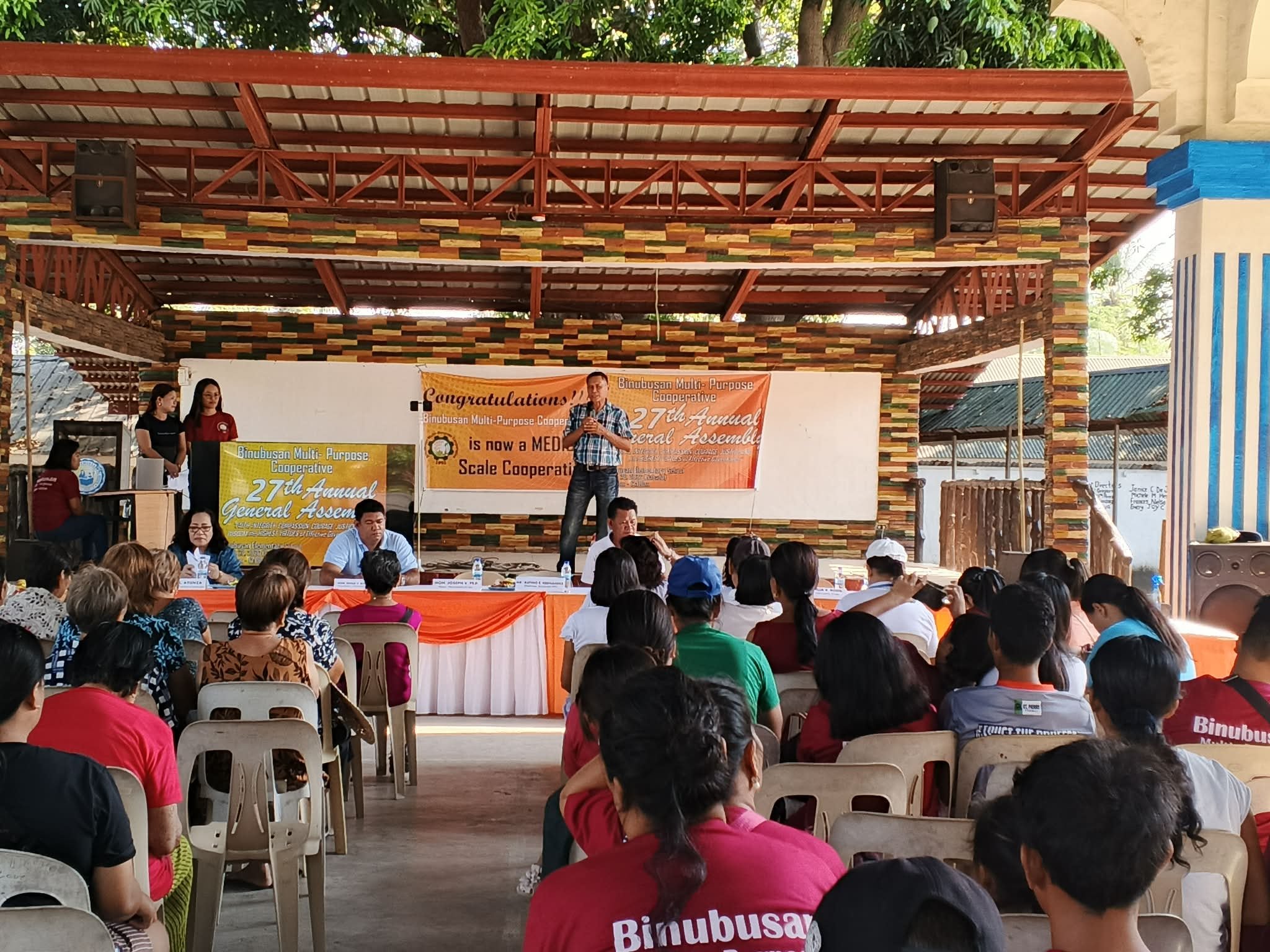
“The cooperative cannot exist without membership,” he said. “We must support our members by returning what is due to them. Now, they are very happy, and who wouldn’t? From near bankruptcy, they could say that they are very blessed.”
Mr. Hernandez offered a piece of advice for the other cooperatives seemingly facing insurmountable odds. First, failure is not the end. Second, leadership requires faith stronger than spreadsheets. Third, their goal is not mere survival but genuine service to the co-op members.
Finally, he credited his wife, whose belief and faith in him gave Mr. Hernandez the confidence boost to persevere when the easier path would have been to walk away. The cooperative thrived today because his wife believed in him enough to fight for it even when fighting meant working without pay.
“Faith, compassion, integrity, courage, justice, and wisdom. These are not soft skills. They are the structural steel of any organization that hopes to endure,” he said.